Mice and rats get into Lower Mainland homes in every month of the year. If they are in your house, you may have heard that BC banned rat poison. That is only partly true. In January 2023, BC limited three specific ingredients to a short list of essential services. Homes are not on that list. Traps and some other products are still legal. Here is what that means for your home, and what a licensed pest control company may still use.
Is rat poison legal in BC?
Some of it is. BC did not ban rat poison as a whole. It restricted three ingredients: brodifacoum, bromadiolone, and difethialone. The province calls products with these ingredients second-generation anticoagulant rodenticides, or SGARs.
Traps are not covered by this rule. First-generation products are not covered either.
What changed in BC in January 2023?
BC first put a temporary ban on the three ingredients in July 2021. The rules took full effect on 21 January 2023.
Since then, only essential service locations can use them. The province’s list includes hospitals and health facilities, emergency response, power, water, and oil and gas. It also covers farms and food (including grocery stores and food banks), transport, waste and sanitation, communications, coroner services, and government conservation programs.
Ordinary homes and offices are not on the list.
The rule applies to the pest control company, not only to the person who buys the product. A licensed company must not use these three ingredients at a site that is not on the list. Even on a listed site, there are limits. Rodents must be present, other methods must be tried first, and baiting is capped at 35 days in a row and 120 days a year.
The province says the reason is wildlife. Its own wording: “Natural predators like hawks and owls can die or suffer long-term effects from eating poisoned rodents.”
Can a pest control company still use mouse poison in my house?
Not those three ingredients. On an ordinary house job, no licensed company in BC can use brodifacoum, bromadiolone, or difethialone. That is true for every company, not only one.
Two things are still allowed on any job, including homes:
- Traps. The province calls snap and electronic traps the best option.
- First-generation anticoagulants, which are chlorophacinone, diphacinone, and warfarin. The province describes them as a last resort for short-term use.
Other rules still apply to each product, including federal rules on how it is registered and labelled. This article does not cover those.
What RainCity uses: on house jobs our bait is a first-generation product, chlorophacinone (we use Flatline Soft Bait). It goes down only after the entry points are sealed, and only as much as the job needs.
If I should not use those black boxes, what can I use instead?
Many homeowners ask this, and it rarely gets a straight answer. Here is the legal side of it.
Traps are legal for you and for a licensed company. A snap trap only works on the mouse or rat that finds it, so where you put it matters, and so does keeping it out of the way of children and pets.
Closing the holes matters too. Mice and rats do not appear from nowhere. They come in through gaps, and a trap does not close a gap. That is why a RainCity visit starts outside, with the entry points.
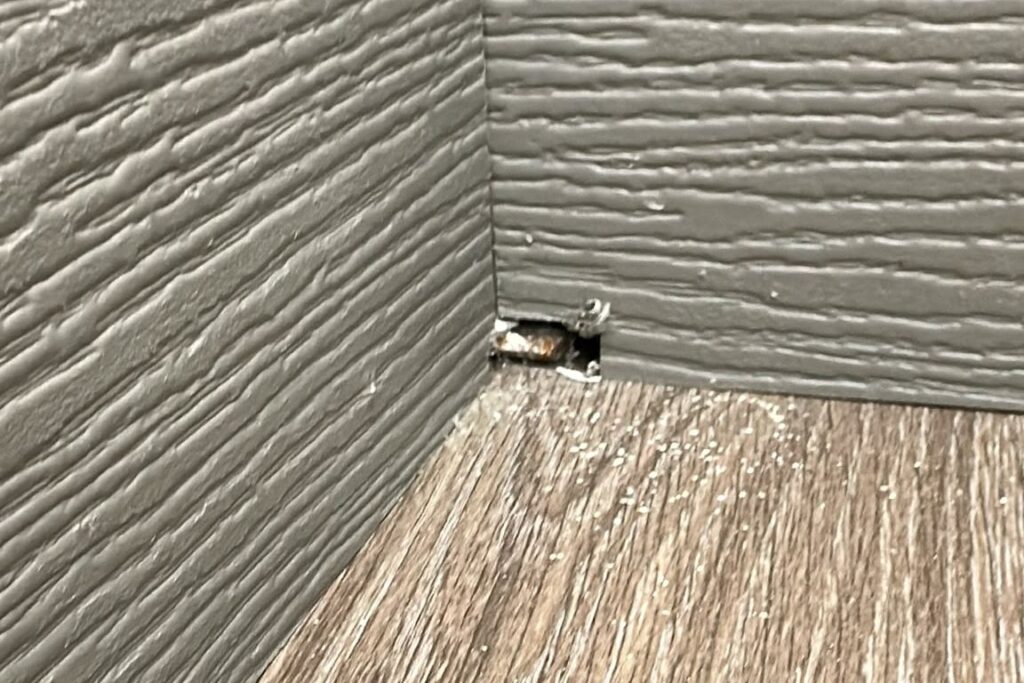
Why is the hardware store bait box not the same as what a professional does?
BC now requires a licence to buy the three restricted ingredients. They are not products a homeowner picks up off a shelf.
The bigger difference is the job. A pest control visit is more than putting bait down. Below is what a RainCity visit includes.
Is rat poison safe around kids and pets?
The BC rule is about three named ingredients. It does not name any other product as safe for children or pets, so the question is still worth asking.
Before anyone puts bait in your home, ask three things: What product is it? Where will it go? How is it kept away from children and pets? A good company will answer plainly.
Our answers: the product is named above. It goes inside wall voids and sealed spaces, placed after the holes are closed, so it stays out of reach and where we put it.
Did my city ban rat poison?
The rule that reaches your house is the provincial one. Some cities limit rodenticides on their own land. New Westminster, for example, applies its rules to city-owned property, and the city says it does not have the authority to regulate private land.
So a city rule about parks and city buildings does not change what happens in your home.
What does a RainCity rodent visit include?
The owner of RainCity Pest Control describes a house rodent job this way:
- The quote. We quote the job on the call.
- Outside. We inspect for entry points and seal the ones we find.
- Inside. We bait and seal holes in the kitchen or kitchens, bathroom or bathrooms, laundry room, and other key areas. We also set traps.
- Follow-up. We come back for a follow-up visit two weeks after the first service.
Jobs start at $350 for a condo, $395 for a townhouse, and $450 for a detached home, plus GST. One price covers the first visit, the follow-up at two weeks, and every return visit until it is solved. This order (inspect, seal, treat last) is called integrated pest management. Our article on why we seal before we treat walks through it step by step.
What should I do next?
If you have mice, start with our mouse control page. If you have rats, see our rat control page. For how we price and plan visits, see plans and pricing.
When you are ready for a quote, call 236-521-8668 and you will have your price on that call, or send us a message. We serve Vancouver, Surrey, and the Lower Mainland.
This article is general information, not legal advice. For the rules themselves, see the BC government page on second-generation anticoagulant rodenticides and the province’s guide for residents and non-essential services.