

Squirrel Removal & Control in Vancouver & Surrey
Sciurus carolinensis (Eastern Grey Squirrel) / Tamiasciurus douglasii (Douglas Squirrel)
Agile roofline invaders that chew electrical wiring and destroy attic insulation, creating serious fire and structural hazards.
"Your pest problem
is our business"
is our business"
- RainCity Pest Control -

Pest Problem with Squirrels?
Raincity can help!
Proudly Canadian
Pet Friendly
Squirrels
Overview
Agile gnawers that infiltrate attics through the roofline, destroying insulation and creating fire hazards by chewing electrical wiring throughout BC homes and commercial properties.
Cute Outside, Catastrophic Inside
Grey Squirrels are a familiar and beloved sight in BC parks and gardens — but when they gain access to your attic, they become one of the most destructive rodent pests a homeowner can face. Squirrels enter through gaps at the roofline, in soffits, and around roof vents, and once inside they gnaw through insulation, structural timber, and most critically, electrical wiring. Chewed wiring caused by squirrels is a leading cause of attic fires in BC. Unlike mice and rats, squirrels are diurnal — their activity in the attic is loud, frequent, and very obvious during daylight hours.


Raincity
Risk Index
Our Risk Index breaks down each pest's threat level so you know exactly what you're dealing with and how urgently to act.
Risks: Squirrels
Property
Damage
9 / 10
Nuisance
Level
7 / 10
Health
Threat
3 / 10Structural & Material
Noise & Disruption
Bite & Disease Exposure
What This Means For You
Squirrels gnaw constantly to maintain their teeth — insulation, vapour barriers, structural timber, and electrical wiring are all at risk. Chewed electrical wiring in attic spaces creates a serious fire hazard and may invalidate home insurance claims.
Daytime scurrying, rolling of nuts, and gnawing sounds from the attic are highly disruptive. Squirrels also raid bird feeders, dig up gardens and lawns, and strip bark from ornamental trees.
Squirrels pose a low direct health risk. Their droppings can carry Salmonella and Leptospirosis, and they may carry ticks. The primary risk is structural — particularly the fire hazard created by gnawed electrical wiring.
Know Your Pest
Squirrels Knowledge, Prevention Tips & Home Protection Advice.
Facts: Squirrels
Grey Squirrel: 25–30cm body plus 20–25cm bushy tail; grey fur with white underside; prominent black eyes. Douglas Squirrel: smaller, dark grey-brown above with orange-buff underside. Both are fast, agile climbers.
Nuts, seeds, berries, bark, bird eggs, and fungi — caches food extensively for winter
Moderate — two litters of 2–4 young per year; young disperse at 10–12 weeks
Summer
Spring
Fall
Winter


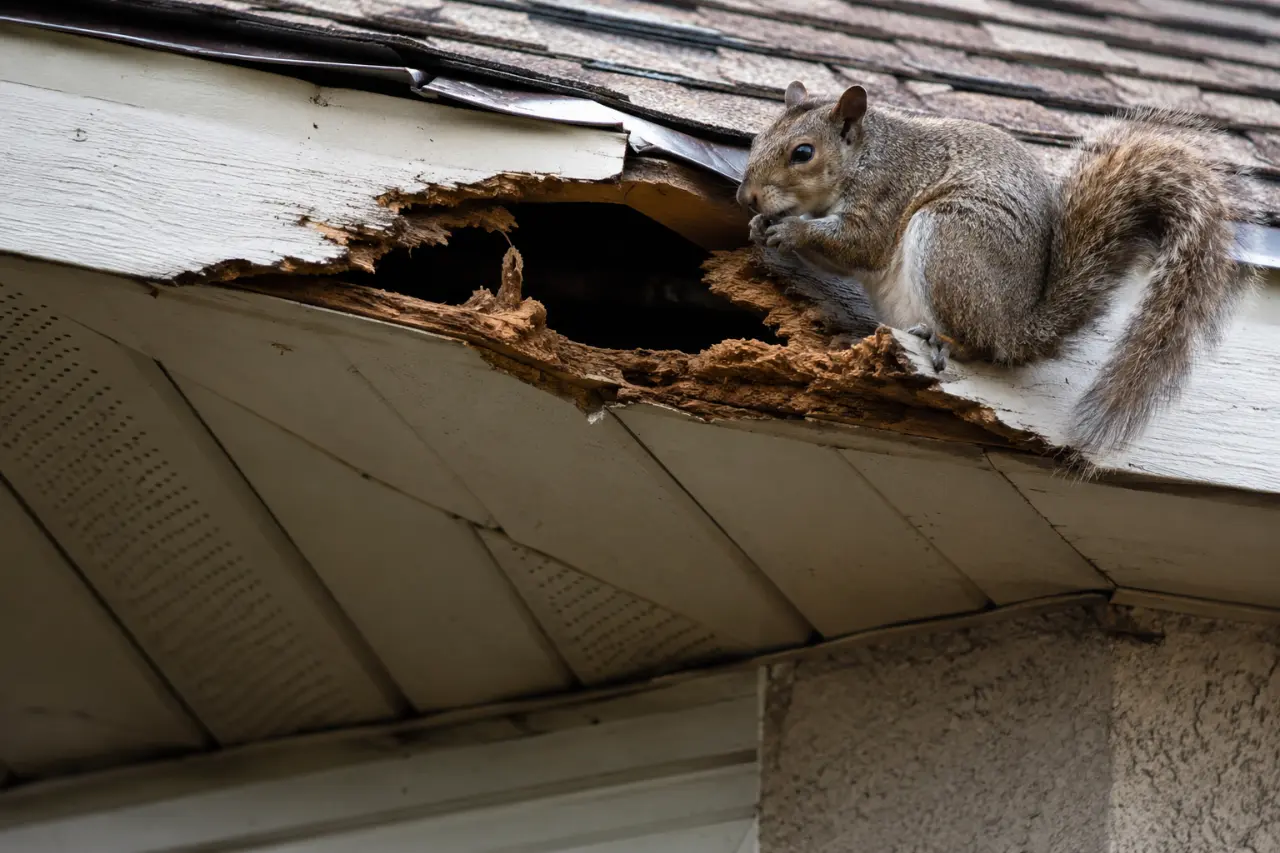

The Eastern Grey Squirrel was introduced to BC and is far more destructive than native species due to its bold, habituated behaviour around humans. Squirrels can chew through standard roof materials including plastic vent covers and thin aluminium flashing — all exclusion materials must be heavy gauge steel to be effective.
Trim all tree branches to at least 3 metres from the roofline — squirrels use overhanging branches as their primary access route to your roof. Replace plastic roof vent covers with heavy gauge steel mesh covers that squirrels cannot chew through.
One-Way Exclusion Door & Steel Exclusion (no chemicals required)
Sealing a squirrel inside your attic results in panic-driven destruction as the animal attempts to gnaw its way out — dramatically increasing the damage caused. One-way exclusion must always be used to allow the animal to exit before the entry point is permanently sealed.
RainCity installs one-way exclusion doors that allow squirrels to exit but not re-enter, followed by permanent heavy gauge steel exclusion of all identified and potential entry points across the full roofline.
One-way exclusion door installation at primary entry points combined with full roofline inspection and heavy gauge steel exclusion of all gaps, vents, and vulnerable materials across the structure.
Squirrel exclusion typically achieved within 3–7 days; full roofline exclusion sealing completed in the same initial visit.
Signs of Activity
Early detection prevents small issues from becoming full infestations. Watch for signs in hidden or undisturbed areas.
Daytime Scurrying in Attic
Loud scurrying, rolling, and thumping sounds from the attic during daylight hours — squirrels are diurnal (active during the day), which distinguishes them from rats and mice that are primarily nocturnal.
Damaged Roof Vents or Soffits
Chewed or pulled-back plastic roof vent covers, torn soffit panels, and gnawed fascia boards at the roofline — squirrels enlarge existing small gaps to create usable entry points.
Gnawed Wiring in Attic
Electrical cables with gnawed or stripped insulation discovered during attic inspection — one of the most serious and dangerous signs of squirrel activity, requiring immediate electrical assessment.
Squirrels on the Roof
Regular observation of squirrels running along the roofline, investigating soffits and vents, and accessing the roof via overhanging tree branches — active scouting for entry points.
Nesting Material in Insulation
Compressed areas of attic insulation and gathered nesting material — leaves, shredded insulation, and plant fibres — forming a nest in a corner of the attic space.
Frequently Asked Questions
Find expert answers to our most common questions and discover how we keep your home or business pest-free.
Squirrels access rooftops via overhanging tree branches and then investigate the roofline for entry points — gaps at soffit joins, damaged roof vents, and openings where different roofline materials meet. They can chew through plastic and thin aluminium to enlarge small gaps.
Yes. Squirrels gnaw electrical wiring to maintain their constantly growing teeth — stripped and exposed wiring in attic spaces is a direct fire hazard. If you have squirrels in your attic, an electrical inspection following removal is strongly recommended.
There may be more than one squirrel, and young may be present in the nest. Sealing a squirrel inside causes panic-driven destruction far exceeding normal activity. A one-way exclusion door must be used to ensure all animals have exited before the entry point is permanently sealed.
Grey Squirrels do not hibernate. They remain active year-round, relying on cached food stores during winter. This means squirrel attic infestations can occur and worsen at any time of year, though entry attempts peak in autumn as squirrels seek winter shelter.
Trim all tree branches to at least 3 metres from the roofline to eliminate the primary access route. Install metal squirrel baffles on downpipes they may be climbing. Replace all plastic roof vent covers with heavy gauge steel mesh that squirrels cannot chew through.
Ready to Get Rid of Squirrels?
Let our professional team protect your home or business with proven solutions that work.
Schedule an inspection
- Local, licensed & Insured
- Fast Response & Reliable Service
- Satisfaction Guaranteed