

Bee Removal & Control in Vancouver & Surrey
Apis mellifera (Honey Bee) / Bombus spp. (Bumble Bee)
Essential pollinators that become a structural and safety concern when colonies establish inside walls, soffits, or roof spaces.
"Your pest problem
is our business"
is our business"
- RainCity Pest Control -
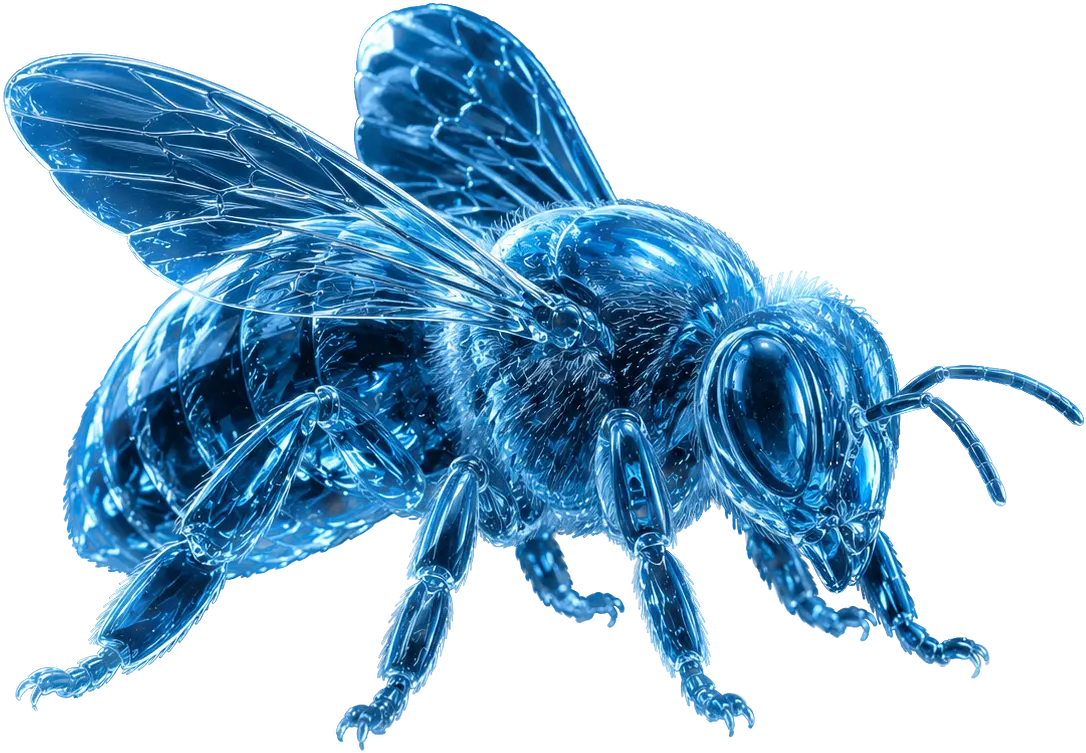
Pest Problem with Bees?
Raincity can help!
Proudly Canadian
Pet Friendly
Bees
Overview
While bees are vital pollinators, colonies nesting inside structures create safety risks and require careful management by trained professionals.
Vital Pollinators — But Not in Your Walls
Bees are essential to BC’s ecosystem and food supply, and RainCity approaches bee management with the health of pollinators in mind. However, when a colony establishes itself inside a wall cavity, soffit, or roof space, it creates a genuine safety risk — particularly for individuals with bee sting allergies — and the honeycomb, if left untreated, can cause significant structural damage from wax melt and honey leakage. Removal and relocation is always our preferred approach.


Raincity
Risk Index
Our Risk Index breaks down each pest's threat level so you know exactly what you're dealing with and how urgently to act.
Risks: Bees
Property
Damage
6 / 10
Nuisance
Level
6 / 10
Health
Threat
7 / 10Structural & Material
Noise & Disruption
Bite & Disease Exposure
What This Means For You
Established honeybee colonies inside wall cavities produce significant honeycomb. If the colony dies or is killed without removal, wax and honey melt into walls causing staining, structural damage, and secondary pest attraction.
High bee traffic around a nesting site restricts outdoor activity and access to affected areas of the property. Defensive behaviour peaks during hot weather and when the nest is disturbed.
Bee stings cause pain and localised swelling in most people. For the estimated 3% of adults with bee venom allergies, a single sting can trigger anaphylaxis — a life-threatening emergency requiring immediate medical intervention.
Know Your Pest
Bees Knowledge, Prevention Tips & Home Protection Advice.
Facts: Bees
Honey Bee: 15mm, golden-amber with dark banding, hairy body. Bumble Bee: larger (20–25mm), very hairy, black and yellow banding. Both have a distinctive narrow waist and carry pollen baskets.
Nectar and pollen from flowering plants
Moderate — colonies grow to 50,000–80,000 workers over the season; swarms in spring create new colonies
Summer
Spring
Fall
Winter


Killing a honey bee colony inside a wall without removing the comb is a serious mistake. Melting honeycomb and fermented honey can cause thousands of dollars in damage and attract secondary pests including wax moths, ants, and rodents. Always remove the comb.
Inspect your roofline, soffits, and exterior walls each spring before bee season. Seal any gaps larger than 6mm before swarm season (April–June) to prevent colony establishment.
Live Removal & Relocation preferred; targeted treatment only when relocation is not feasible
Attempting to seal bees inside a wall cavity causes them to chew through into living spaces. Spraying without removing the comb leaves decomposing wax and honey to cause structural damage and attract further pests.
RainCity prioritises live removal and relocation to a local beekeeper where structurally feasible. Where treatment is necessary, we always include honeycomb removal to prevent secondary damage.
Live trap-out or cut-out removal with comb extraction and relocation to local beekeeper; targeted treatment only where removal is not structurally feasible.
Live removal and relocation completed in a single visit where accessible; structural removal of comb required within 1–2 visits.
Signs of Activity
Early detection prevents small issues from becoming full infestations. Watch for signs in hidden or undisturbed areas.
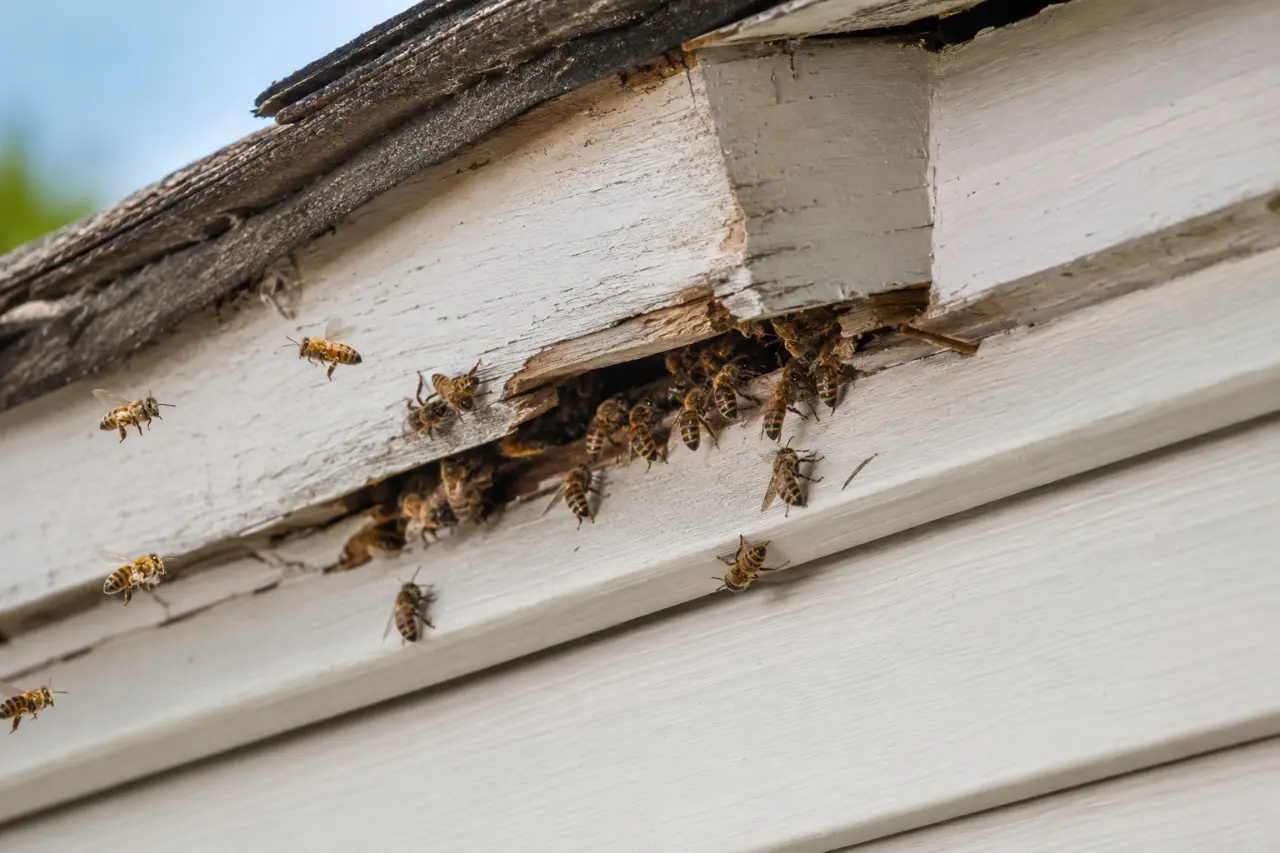
High Bee Traffic at a Single Point
A consistent stream of bees entering and exiting a gap in your roofline, soffit, fascia board, or exterior wall indicates an established colony inside the structure.
Buzzing Sound Inside Walls
A sustained buzzing or humming sound emanating from inside a wall, ceiling, or roof space — particularly on warm days when colony activity is highest.
Honey or Wax Staining
Dark staining or soft spots on interior walls or ceilings adjacent to an external colony site, caused by honeycomb wax and honey seeping through the structure.
Swarm on Your Property
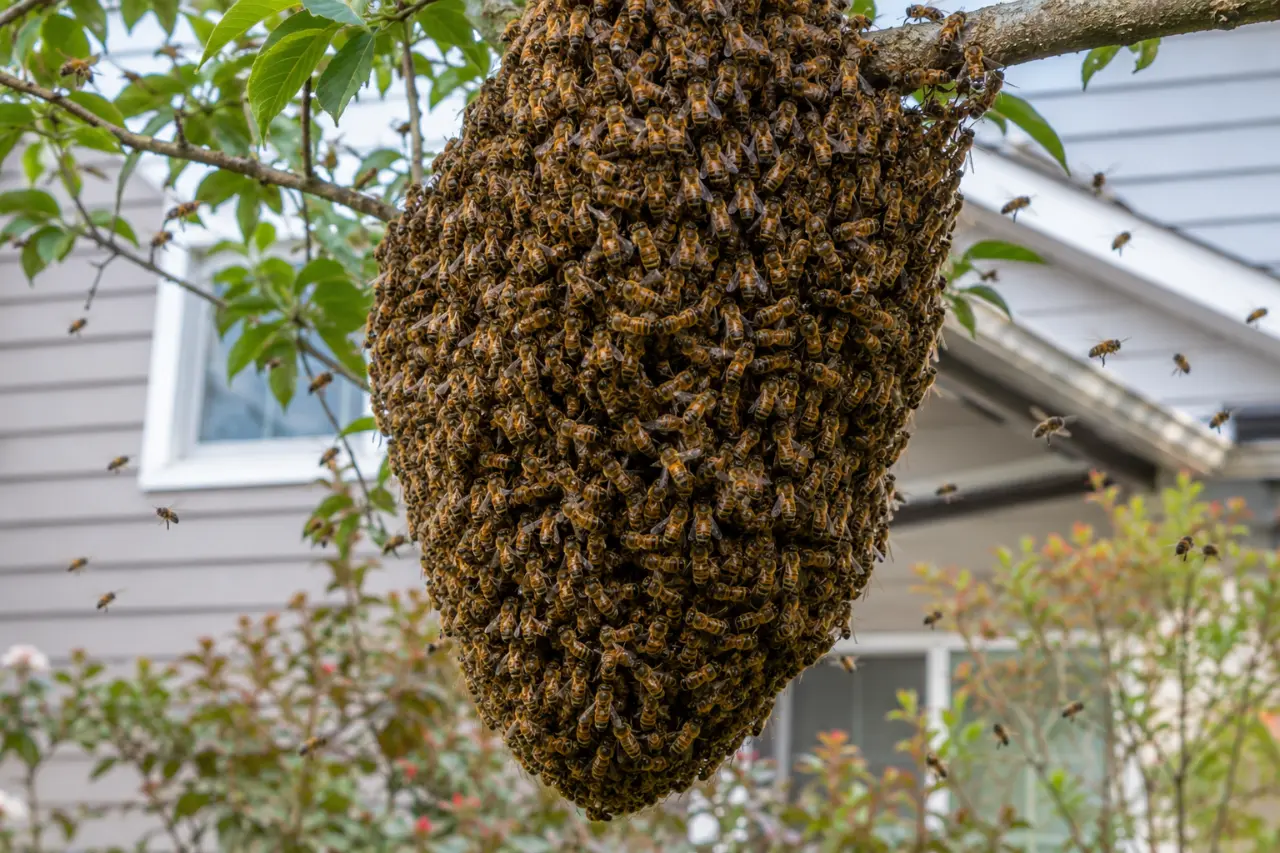
A cluster of thousands of bees hanging from a tree branch, fence, or structure — a swarm is a colony in transit seeking a new nesting site and is typically docile but should not be disturbed.
Increased Defensive Behaviour
Bees repeatedly flying at people near a section of the house, garden, or outbuilding — defensive foraging behaviour indicating a nearby colony that perceives you as a threat.
Frequently Asked Questions
Find expert answers to our most common questions and discover how we keep your home or business pest-free.
A swarm hanging temporarily may move on within 24–72 hours. However, once bees have entered a cavity and begun building comb, they will not leave voluntarily. An established colony inside a structure requires professional intervention.
Yes — live removal and relocation to a local beekeeper is always RainCity’s preferred approach. This is feasible in most situations where the colony is accessible. We are committed to protecting pollinators wherever possible.
Sealing bees inside a wall cavity is dangerous. The colony will attempt to find a way out, often chewing through into living spaces. If the colony dies, decomposing wax and honey cause significant structural damage and attract secondary pests.
Honey bees are golden-amber, hairy, and relatively docile. Wasps are slender with a narrow waist, smooth and shiny, and significantly more aggressive. If you’re unsure, observe from a safe distance and contact us for identification.
For most people, a bee sting causes temporary pain and localised swelling. For those with bee venom allergies, even a single sting can trigger anaphylaxis. If you know you are allergic, carry an epinephrine auto-injector and seek immediate medical attention after any sting.
Ready to Get Rid of Bees?
Let our professional team protect your home or business with proven solutions that work.
Schedule an inspection
- Local, licensed & Insured
- Fast Response & Reliable Service
- Satisfaction Guaranteed