

Termite Control & Treatment in Vancouver & Surrey
Isoptera (Pacific Dampwood Termite: Zootermopsis angusticollis / Western Subterranean Termite: Reticulitermes hesperus)
Silent wood-consuming colonies that cause irreversible structural damage long before they are ever detected.
"Your pest problem
is our business"
is our business"
- RainCity Pest Control -

Pest Problem with Termites?
Raincity can help!
Proudly Canadian
Pet Friendly
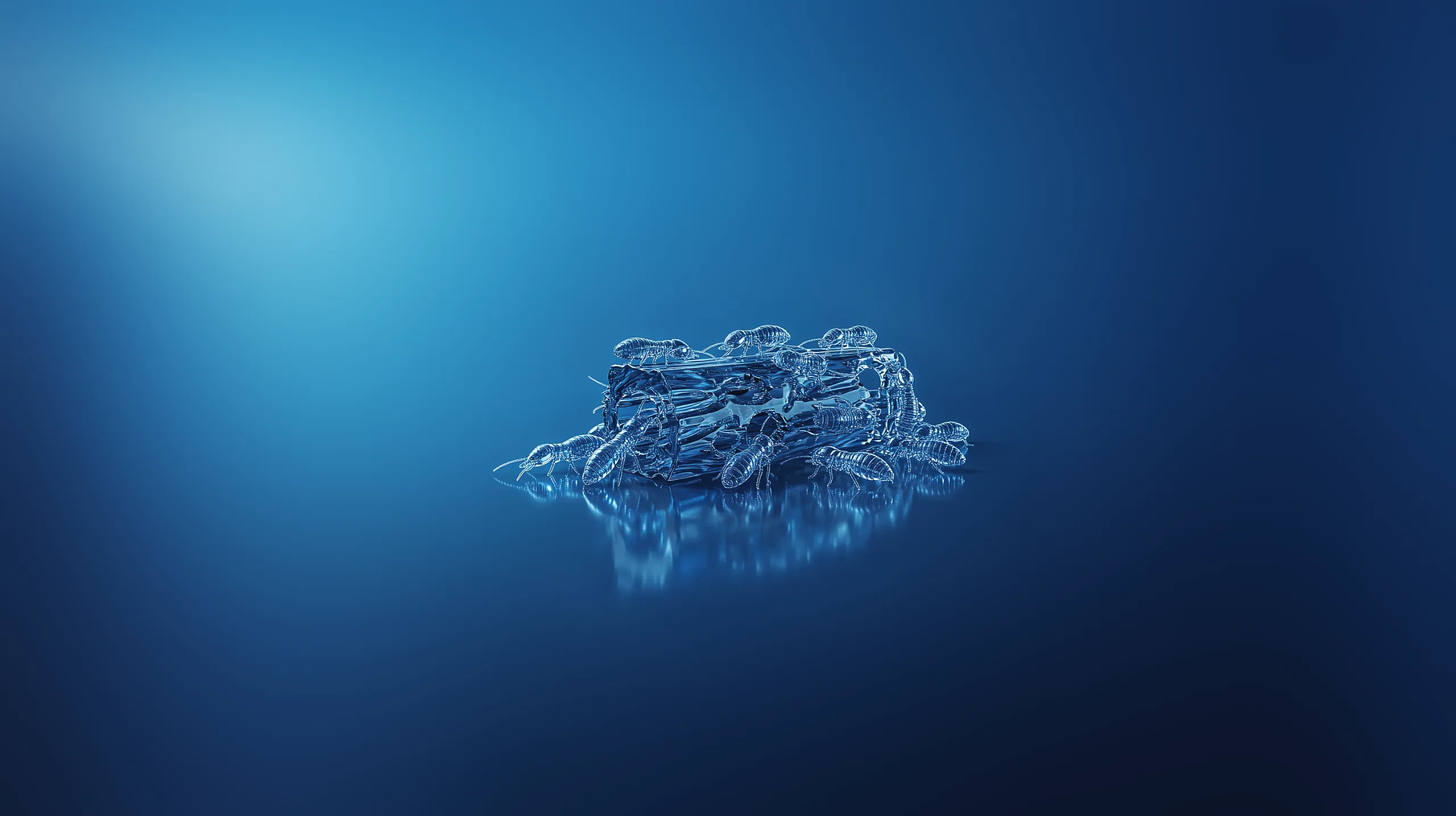
Termites
Overview
Silent structural destroyers that consume wood from the inside out. Termites cause billions in property damage annually — early detection and professional treatment are critical to protecting your home.
The Silent Destroyers Inside Your Walls
Termites are among the most economically destructive pests in North America, and their presence in British Columbia is a growing concern as climate conditions shift. Unlike most pests, termites work entirely out of sight — consuming wood, flooring, and structural framing from the inside out for years before visible damage appears. By the time most homeowners notice a problem, significant structural compromise has already occurred. Early detection through professional inspection is the single most important defence against termite damage.


Raincity
Risk Index
Our Risk Index breaks down each pest's threat level so you know exactly what you're dealing with and how urgently to act.
Risks: Termites
Property
Damage
10 / 10
Nuisance
Level
4 / 10
Health
Threat
2 / 10Structural & Material
Noise & Disruption
Bite & Disease Exposure
What This Means For You
Termites are the single most destructive pest to property in North America. A mature colony can consume a linear foot of wood framing every few months. Damage to structural beams, flooring, and wall framing can cost tens of thousands of dollars to remediate.
Termites are rarely seen until significant damage is done. The nuisance factor is primarily the stress and financial burden of discovering an established infestation and the scope of treatment and repair required.
Termites pose minimal direct health risk. Some individuals may experience allergic reactions or asthma symptoms from termite debris and frass particles. The primary risk is entirely structural.
Know Your Pest
Termites Knowledge, Prevention Tips & Home Protection Advice.
Facts: Termites
Soft-bodied; pale white to brown; 4–15mm depending on caste; often confused with ants — termites have straight antennae, a thick waist, and equal-length wings. Workers are pale and rarely seen outside the colony.
Cellulose — structural timber, flooring, wall framing, paper, cardboard, and any wood-based building material
Slow to establish, then exponential — colonies reach 100,000–1,000,000 workers over several years; queens live 20–50 years
Summer
Spring
Fall
Winter

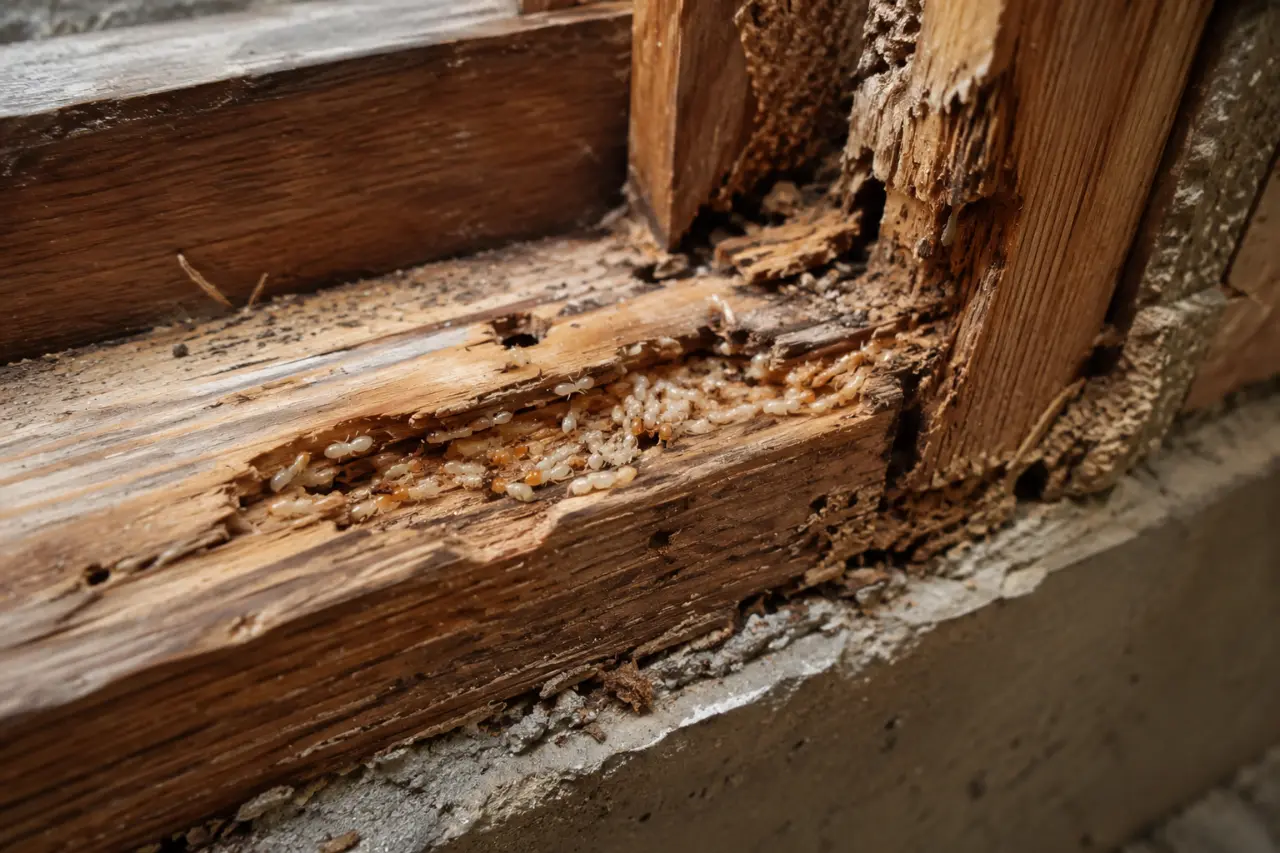


BC is home to both Pacific Dampwood Termites — which infest moist or decaying wood — and the more destructive Western Subterranean Termite, which builds underground colonies and can attack structurally sound timber. Subterranean termites are particularly difficult to detect as they travel through sealed mud tubes inside wall voids.
Eliminate wood-to-soil contact around your foundation — remove wooden debris, keep firewood stacked away from the structure, ensure proper drainage away from the foundation, and fix any moisture issues such as leaking gutters or condensation in crawl spaces. Termites need moisture to survive.
Liquid Termiticide Barrier & Bait Station Programme (Applied to soil and structural voids)
Consumer termite products are entirely inadequate for treating an established colony. Subterranean termite colonies can contain hundreds of thousands of workers spread across a large underground territory — surface sprays cannot reach the colony or queen.
RainCity uses a combination of liquid termiticide barrier treatments applied to the soil around the foundation and professional bait station systems that workers carry back to the colony, eliminating the queen and collapsing the entire population.
Soil-applied liquid termiticide barrier around the full foundation perimeter combined with in-ground bait station installation at key foraging points. Annual monitoring recommended.
Bait station programmes achieve full colony elimination over 3–6 months. Liquid barrier treatments provide immediate structural protection and long-term prevention.
Signs of Activity
Early detection prevents small issues from becoming full infestations. Watch for signs in hidden or undisturbed areas.
Mud Tubes on Foundation Walls
Pencil-width tubes of mud running along foundation walls, concrete piers, or exterior walls — built by Subterranean Termites as protected highways between their underground colony and above-ground food sources.
Hollow-Sounding Timber
Structural timber, flooring, or wall panelling that produces a hollow sound when tapped — termites consume wood from the inside, leaving only a thin outer shell.
Swarmers (Winged Termites)
Winged reproductive termites (alates) emerging in large numbers indoors — typically in spring — are a definitive sign of a mature, established colony inside or immediately adjacent to the structure.
Discarded Wings Near Windows
Piles of small, equal-length wings near windowsills, door frames, and light sources — shed by swarmers after their mating flight. Often the first visible sign of a termite infestation homeowners notice.
Frass (Termite Droppings)
Small piles of wood-coloured pellets resembling sawdust or sand near infested wood — produced by Drywood Termite species as they push droppings out of their galleries through small kick-out holes.
Bubbling or Uneven Paint
Paint on walls or woodwork that appears bubbled, blistered, or uneven — caused by moisture and termite activity just beneath the surface that disrupts the paint adhesion layer.
Frequently Asked Questions
Find expert answers to our most common questions and discover how we keep your home or business pest-free.
Yes. BC is home to Pacific Dampwood Termites, which are widespread throughout the province, and Western Subterranean Termites, which are established in the Lower Mainland, Fraser Valley, and Vancouver Island. Termite activity in BC is increasing as milder winters expand their range.
Both damage wood but are easy to distinguish. Termites have straight antennae, a thick waist, and equal-length wings. Carpenter Ants have elbowed antennae, a pinched waist, and wings of unequal length. Termites also produce mud tubes; Carpenter Ants produce coarse sawdust-like frass. If in doubt, contact us for a professional identification.
A mature Subterranean Termite colony of 500,000 workers can consume approximately 1kg of wood per day. Over several years of undetected activity, this translates to severe structural compromise of floor joists, wall framing, and support beams — repairs can run into tens of thousands of dollars.
Liquid barrier treatments provide immediate structural protection by creating a treated zone termites cannot cross. Bait station programmes eliminate the entire colony but work more slowly — full colony collapse typically takes 3–6 months as workers gradually carry the bait back to the queen.
Most standard home insurance policies in Canada exclude termite damage, classifying it as a maintenance issue rather than a sudden loss. This makes prevention and early detection critically important — damage discovered early is far less costly to repair than an advanced infestation.
Annual professional termite inspections are recommended for homes in the Lower Mainland, Fraser Valley, and Vancouver Island. Homes with previous termite activity, crawl spaces, or significant wood-to-soil contact should be inspected at least once per year.
Ready to Get Rid of Termites?
Let our professional team protect your home or business with proven solutions that work.
Schedule an inspection
- Local, licensed & Insured
- Fast Response & Reliable Service
- Satisfaction Guaranteed